Sanity CMS – Features, Benefits and Use Cases

Charli
Marketing Manager
When it comes to managing and editing the content for your website, there are virtually endless options for the platform, or content management system (CMS) you can use to power it.
There are well-established options you might have heard of, such as WordPress, Drupal, and Umbraco. In the last few years, a new generation of platforms has emerged, offering improved flexibility, scalability, and performance. One of these platforms is Sanity.
In this quick guide, we’ll cover:
- What Sanity CMS is
- Key features and benefits
- How Sanity CMS compares with other platforms at a top-level
- Sanity CMS use cases and examples
What is Sanity CMS?
Sanity is a powerful and highly customisable headless content management system (CMS). Headless means that the frontend is separated from the backend – unlike a “traditional” CMS setup where the two are linked. Some traditional CMS platforms like WordPress can also be set up to be headless, but Sanity is natively headless, and doesn’t have a frontend at all.
Sanity differs from other headless CMS platforms because it treats content as structured data. This means it breaks down content into its smallest possible components, and it can be arranged and expressed on any web page, app, feed or product without having to manually repurpose it. This is what makes it extremely customisable and suitable for creating highly intuitive editing experiences.
Sanity CMS: features & benefits
There are numerous benefits of using Sanity, and headless architecture in general, to power your website, but here are some of the key ones.
- Content flexibility – Sanity’s structured data approach enables developers to define custom content types (pages, articles, products, locations, etc) and the relationships between them. This gives you more control over how content is expressed in the frontend and makes it easier to reuse across your website and other platforms.
- Intuitive editing – Sanity’s editing environment is open and source and completely customisable, allowing you to add components like nav bars and menus, form fields and inputs. This enables you to create a more intuitive experience that makes adding and editing content more efficient for your organisation and your specific needs.
- Real-time collaboration – Sanity supports real-time collaborative editing in the backend, which allows multiple users to edit content at the same time; a bit like Google Docs.
- Developer flexibility – the highly customisable environment makes Sanity easier to seamlessly integrate with lots of other tools and platforms, meaning more flexibility in the tech stack. As there’s no frontend interface, developers have complete freedom to select the best possible framework for your needs.
- Scalable – the highly customisable environment makes Sanity easier to seamlessly integrate with lots of other tools and platforms, meaning more flexibility in the tech stack. As there’s no frontend interface, developers have complete freedom to select the best possible framework for your needs.
Sanity vs other CMS platforms
At Adaptable we use both Sanity and WordPress for website and digital product development – each has its own benefits and potential challenges for a particular use case, and we carefully consider each option on a project-by-project basis.
When it comes to choosing between Sanity and WordPress, generally, we advise that:
- WordPress is ideal for SMEs planning for future growth. You’ll get a more familiar experience that’s slightly easier to pick up and run with.
- Sanity is best suited if you require higher performance and a more customisable setup. Ideal for medium to large companies with complex data and integration requirements who are looking to plan for long-term growth.
Read our comparison of Sanity with other headless and non-headless CMS platforms.
Sanity CMS use cases
Complex custom digital products: Utilita Energy
Sanity’s structured data approach makes it ideal for projects with complex integrations and data relationships. An example of this would be a web app functioning as a quote funnel, like the ones we developed for Utilita Energy.
We created a series of user journeys for Utilita Energy’s home service offerings. Sanity powers the quote funnels, integrated with a WordPress marketing site and their internal CRM. The CMS handles real-time data exchange, including live pricing, engineer availability, and virtual appointment booking, creating a streamlined and seamless user experience. The funnel utilises custom logic to guide users to the most relevant steps or end points based on their answers.
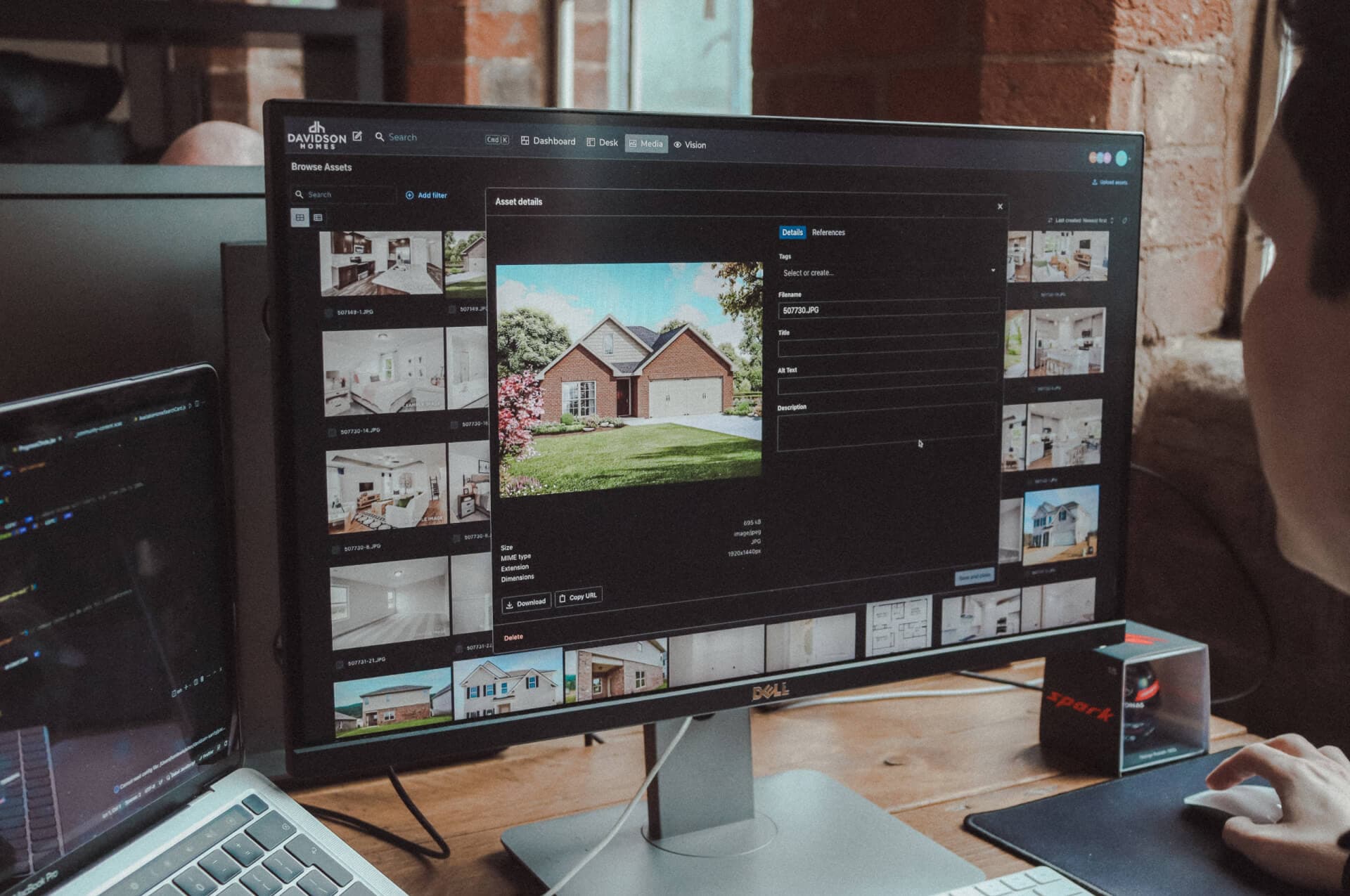
Custom environments with high volumes of data: davidson Homes
The approach that Sanity uses for storing and structuring content and data allows for handling complex relationships. The headless architecture, separating the backend from the user interface, also means it can process a lot of complex data without compromising on frontend performance. This makes it ideal for websites that need a seamless end user experience, with a large and complex data structure behind it, like a multi-state US homebuilder.
After a successful website relaunch, we migrated US-based Davidson Homes to a headless architecture with Sanity to better support their needs as they grew. The project required complex data modelling and integration with multiple listing services (MLS) — all of which could be handled seamlessly in Sanity thanks to its flexibility and scalability.
Multisite setups: Todays Dental
Sanity’s highly customisable and flexible editing experience makes it easy to set up sites with multiple instances managed in the same backend. It also offers a very granular approach to user permissions, giving admins a higher degree of control compared with other platforms. This makes it ideal for multi-site setups that need to add new instances quickly and seamlessly while the central marketing or data team retains control, like a growing network of dental practices.
We created a Sanity multi-site setup for Todays Dental, a group with a growing number of practices across the UK. Creating the framework for one site initially, we were able to hand it over to them to manage and create their own instances, with individual practices having editing capabilities but the central marketing team to oversee the ecosystem.
Key takeaways
- Sanity is a headless CMS designed for modern, scalable, multi-platform content delivery.
- It offers content flexibility, intuitive editing experiences, real-time collaboration, developer freedom and scalability.
- Compared to other CMS platforms, Sanity can offer slightly more flexibility and scalability for large-scale projects with complex data requirements but its high level of customisation isn’t required for every project.
- Sanity’s wide range of features and benefits, particularly its ability to handle complex data relationships, make it ideal for larger scale, more complex projects, such as custom digital products, websites storing and processing large volumes of data, and multi-sites.
Looking to launch a new website or digital product and wondering if Sanity might work for you? Adaptable is an official agency partner of Sanity, which enables us to offer enhanced support and services around the platform. Get in touch and let’s discuss.
Related Posts